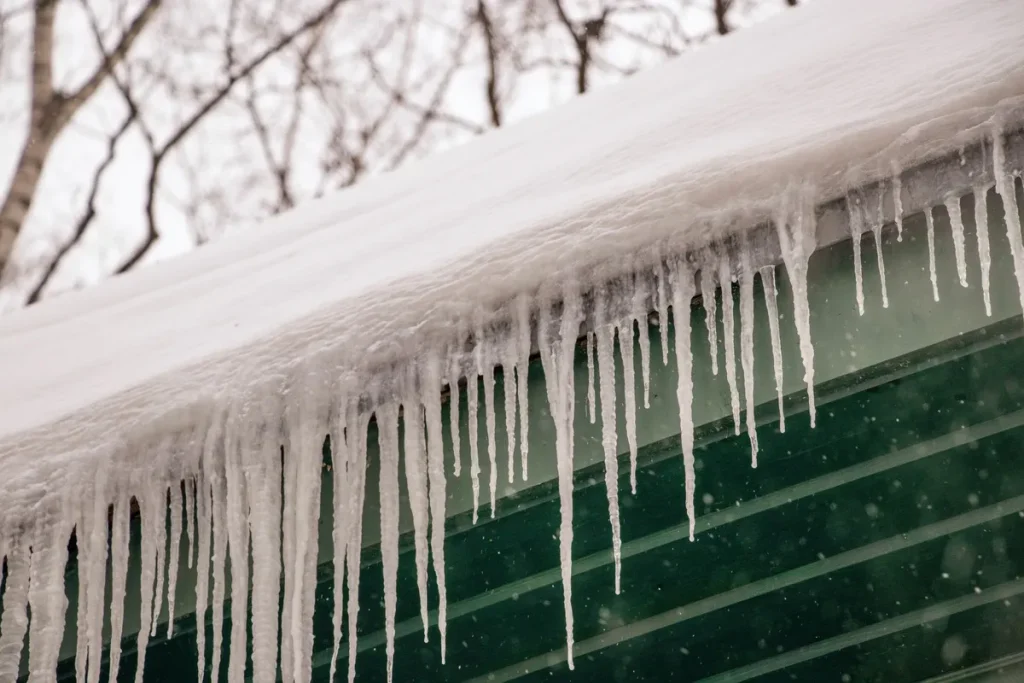
If you have lived through a Duluth winter, you have seen them: thick ridges of ice along the edge of the roof and a row of icicles hanging from the gutters. They look harmless, even pretty, but ice dams are one of the most common causes of water damage in Northland homes. The water they trap finds its way under shingles, into walls and down onto ceilings and window frames, often weeks before anyone notices a stain.
The good news is that ice dams are not bad luck. They have a clear cause, and in most homes that cause can be fixed. This guide explains how ice dams form, what does and does not work, and when it is time to call a roofer.
How an ice dam forms
An ice dam needs three things: snow on the roof, a warm upper roof and a cold roof edge. Heat from the house leaks into the attic through gaps around light fixtures, bath fans, attic hatches and plumbing stacks. That warm air heats the underside of the roof deck and melts the snow sitting on top.
The meltwater runs down the roof until it reaches the eaves. The eaves hang out past the warm walls of the house, so they stay as cold as the outdoor air. The water refreezes there, and over days and weeks it builds a ridge of ice. Every new round of melting adds water behind that ridge. With nowhere to go, the water backs up under the shingles, which are designed to shed water running downhill, not to hold back a pond.
Duluth gets around 85 inches of snow in a typical winter, and long stretches with daytime highs below freezing mean a dam can sit on a roof for months. That is why ice dams are so common here, especially on older homes on the hill with little attic insulation.
Signs you have an ice dam problem
- A thick ridge of ice along the eaves, often with large icicles below it
- Water stains on ceilings or walls near outside walls, often appearing during a thaw
- Peeling paint, swollen trim or water around window frames on upper floors
- Frost on the underside of the roof deck or damp insulation in the attic
- Snow melting quickly over the house while it stays on the garage or an unheated porch
That last sign is a good test. If snow on the house roof disappears days before snow on a detached garage, heat is escaping from the house into the attic.
Why chipping ice and heat cables are not the answer
When water is coming in, the first instinct is to get the ice off the roof. Chipping at ice dams with a hammer, an axe or a shovel almost always damages shingles, gutters and flashing, and it is dangerous on a slippery roof. Even when it works, the dam simply forms again with the next snowfall.
Heat cables can keep a channel open in a problem spot, and they have their place on some roofs. But they use electricity all winter, they can fail without anyone noticing, and they do nothing about the heat loss that causes the dam in the first place. Think of them as a patch, not a fix.
A roof rake used from the ground is a reasonable short-term step. Pulling the bottom few feet of snow off the roof after a big storm removes the snow that feeds the dam. Stay on the ground, keep clear of power lines, and do not try to remove ice that is already frozen to the shingles.
The fixes that work
Lasting ice dam prevention keeps the roof deck cold and gives any water that does form a safe path off the roof. In most Duluth homes, that comes down to four things.
1. Seal the air leaks into the attic
Warm air leaking from the house is the biggest cause of ice dams. Gaps around recessed lights, bath fan housings, plumbing and wiring holes, chimney chases and the attic hatch let warm, moist air pour into the attic. Sealing these gaps is often the most effective fix for the money, and it lowers heating bills at the same time. An insulation or energy contractor can do this work, and we will point out the leaks we see during an attic check.
2. Add insulation where it is thin
Many older Duluth homes have only a few inches of insulation in the attic, and it is often thinnest right where the roof meets the walls. More insulation slows heat loss so the roof deck stays closer to the outdoor temperature.
3. Balance the attic ventilation
Good ventilation brings cold outside air in at the soffits and lets it out near the ridge. That flow carries away the heat and moisture that do make it into the attic. Blocked soffit vents, missing baffles or a roof with only a few small vents near the top are common problems. We check the intake and exhaust and recommend changes that fit your roof.
4. Install ice and water shield at the eaves
Ice and water shield is a self-sealing membrane that goes under the shingles along the eaves and in the valleys. If water does back up behind ice, the membrane keeps it out of the house. Minnesota building codes usually call for an ice barrier at the eaves on new roofs, but many older roofs were installed without one or with too little. It is added during a roof replacement, or by removing and reinstalling the bottom courses of shingles on an existing roof.
When to call a roofer
If you get ice dams every winter, see stains after a thaw, or find frost or damp insulation in the attic, it is worth having the roof and attic checked. The best time is late spring through fall, so the fix is in place before the next snow. A check covers the shingles and flashing at the eaves, the attic ventilation and the insulation, and you get photos of what we find.
Our ice dam prevention service starts with that check and ends with a written plan, so you know what will make the most difference and what it costs. If water has already damaged the roof deck or flashing, we fix that as part of the same project.
A quick winter checklist
- After big snowfalls, rake the bottom few feet of snow off the roof from the ground
- Keep gutters and downspouts clear before winter so meltwater can drain
- Look in the attic on a cold day for frost on nails or the roof deck
- Watch for snow melting fast over the house compared with outbuildings
- Note where icicles form each year and mention it when you book a check
Ice dams are a fact of life in many Northland neighborhoods, but water damage does not have to be. Questions about your roof? Contact Duluth Roof, your roofers in Duluth, MN, and we will help you find the cause and the right fix.